Trying to decide between Cetaphil vs Cerave? We compare ingredients, benefits, acne control, and sensitive skin performance to help you choose the right cleanser for your skin type.
Introduction: Why the Cetaphil vs Cerave Decision Matters More Than You Think

If you’ve searched Cetaphil vs Cerave, you’re likely not casually browsing. You’re trying to solve a real skin problem.
- Maybe your skin feels tight after washing.
- Maybe you’re dealing with acne that won’t calm down.
- Maybe winter dryness is making your moisturizer useless.
In the United States, these two brands dominate dermatologist recommendations: Cetaphil and CeraVe.
- Both are fragrance-free
- Both are marketed for sensitive skin.
- Both are affordable and widely available.
So why does one work beautifully for your friend — and irritate your skin?
The answer lies in barrier science, ingredient chemistry, surfactant strength, and how your specific skin behaves in your climate.
This guide will help you decide confidently — not based on marketing, but on physiology and practical use.
What Exactly Are Cetaphil and Cerave Cleansers?
Both brands produce non-soap facial cleansers designed to:
- Remove dirt and oil
- Preserve the skin barrier
- Minimize irritation
- Support sensitive skin
However, their formulation philosophy differs.
CeraVe’s Approach: Barrier Repair Through Lipids
CeraVe formulations center around:
- Ceramides (1, 3, 6-II)
- Hyaluronic acid
- Niacinamide
- MVE controlled-release technology
The goal is to cleanse while actively reinforcing the lipid barrier.
Cetaphil’s Approach: Maximum Tolerance and Minimal Disruption
Cetaphil focuses on:
- Ultra-mild surfactants
- Low foaming
- Minimal irritation
- High tolerability during flare-ups
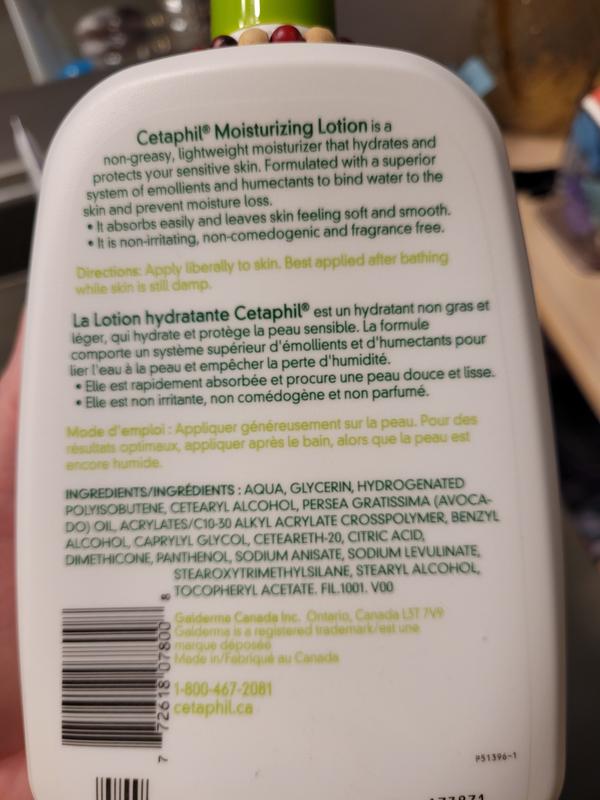
Newer formulas now include niacinamide and panthenol, modernizing the original gentle formula.
This distinction becomes critical when deciding which is better Cetaphil or Cerave for dry skin, acne, or sensitivity.
Skin Barrier Science: The Foundation of the Cerave vs Cetaphil Cleanser Comparison

Your outermost skin layer, the stratum corneum, acts like a brick wall:
- Bricks = corneocytes (skin cells)
- Mortar = lipids (ceramides, cholesterol, fatty acids)
If cleansers strip lipids excessively:
- TEWL (transepidermal water loss) increases
- Inflammation rises
- Acne worsens
- Sensitivity increases
According to the American Academy of Dermatology, maintaining barrier integrity is essential for managing eczema, acne, and rosacea.
Cerave replenishes lipids.
Cetaphil preserves lipids.
That’s the core scientific difference.
Cerave vs Cetaphil Ingredients Comparison
Ceramides (CeraVe)
Ceramides account for nearly 50% of barrier lipids.
Deficiency leads to:
- Dryness
- Increased sensitivity
- Reduced resilience
Cerave replaces ceramides 1, 3, and 6-II — mimicking naturally occurring skin lipids.
Clinical dermatology research shows ceramide supplementation improves barrier repair in eczema-prone skin.
Hyaluronic Acid (CeraVe)
A humectant that binds water molecules.
Low molecular weight penetrates deeper layers; high molecular weight hydrates the surface.
Supports plumpness and reduces post-cleansing tightness.
Niacinamide (Both Brands)
Niacinamide supports:
- Barrier protein synthesis
- Reduction of inflammatory markers
- Sebum regulation
- Redness reduction
Studies referenced through the National Institutes of Health demonstrate its role in improving epidermal barrier function.
Glycerin (Both)
Gold-standard humectant.
Draws water into the stratum corneum and enhances elasticity.
Low irritation potential makes it ideal for sensitive skin.
Panthenol (Cetaphil)
Pro-vitamin B5.
Soothing, hydrating, and barrier-supportive.
Often helpful for reactive or post-procedure skin.
Surfactants: The Real Performance Divider
Surfactants determine:
- Oil removal strength
- Foaming level
- Irritation risk
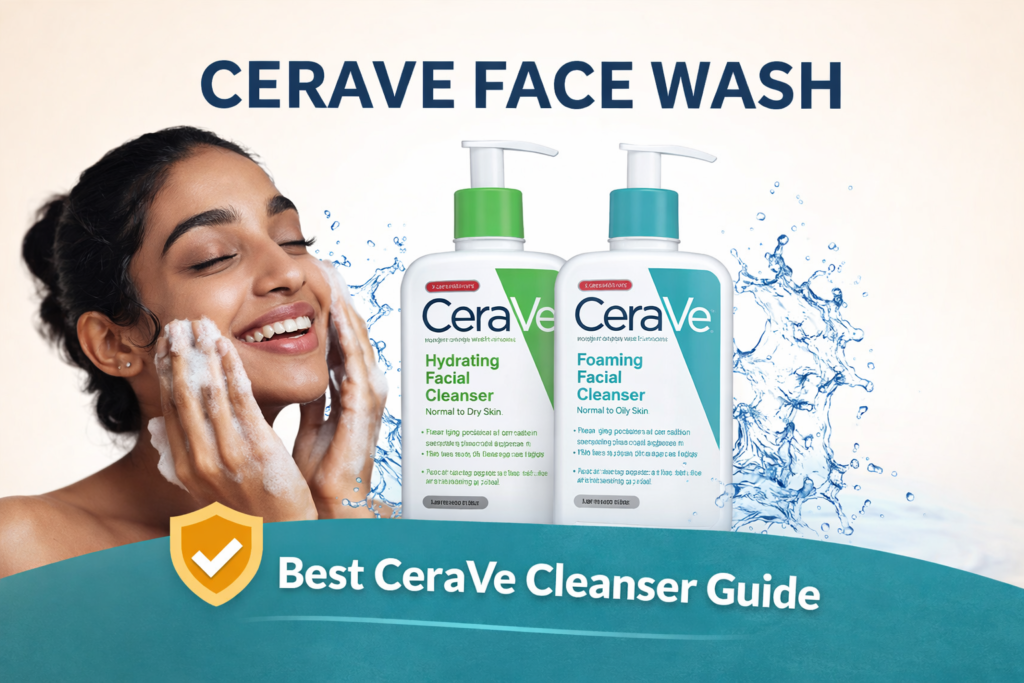
Cerave Foaming Cleanser uses mild anionic surfactants balanced with amphoteric stabilizers.
Cetaphil uses extremely mild, low-foam surfactants.
This explains why acne-prone users often prefer Cerave, while rosacea-prone users tolerate Cetaphil better.
Cetaphil vs Cerave for Sensitive Skin
If your skin:
- Flushes easily
- Stings with actives
- Reacts to weather changes
Cetaphil may provide immediate comfort.
However, Cerave may strengthen the barrier long term through lipid replacement.
Short-term sensitivity → Cetaphil
Long-term resilience → Cerave
Cetaphil or Cerave for Acne-Prone Skin

Acne involves:
- Excess sebum
- C. acnes bacteria
- Inflammation
- Barrier compromise
Cerave’s foaming cleanser removes excess oil more effectively while maintaining hydration.
Cetaphil may be better when acne coexists with dryness or sensitivity.
In humid states like Florida or Texas, Cerave Foaming often performs better.
In dry states like Colorado winters, Cetaphil may feel less stripping.
Which Is Better Cetaphil or Cerave for Dry Skin?
Dry skin lacks lipids.
Cerave replaces lipids.
Cetaphil protects remaining lipids.
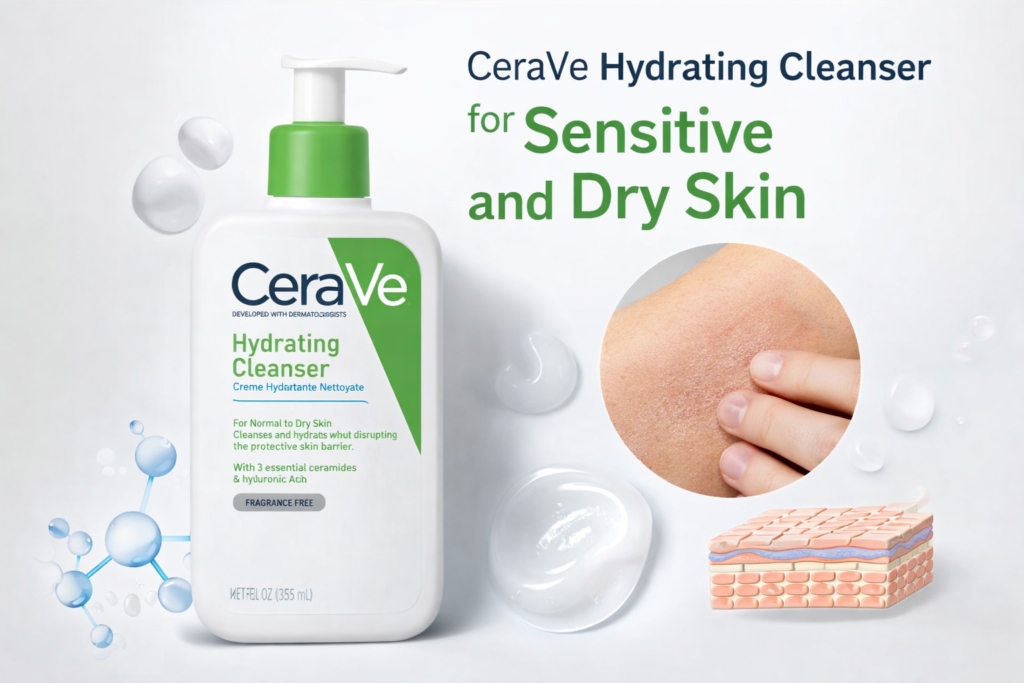
For moderate to severe dryness or aging skin → Cerave Hydrating Cleanser is often superior.
For eczema flare-ups → Cetaphil may be more comfortable.
The National Eczema Association emphasizes gentle, fragrance-free cleansing — both brands qualify.
If tightness and flaking are your biggest concerns, this hydrating version is the one most people with dry skin switch to — you can check the latest availability here.
Texture and Sensory Experience
Cerave:
- Light foam (foaming version)
- Creamy gel (hydrating version)
- Rinses clean
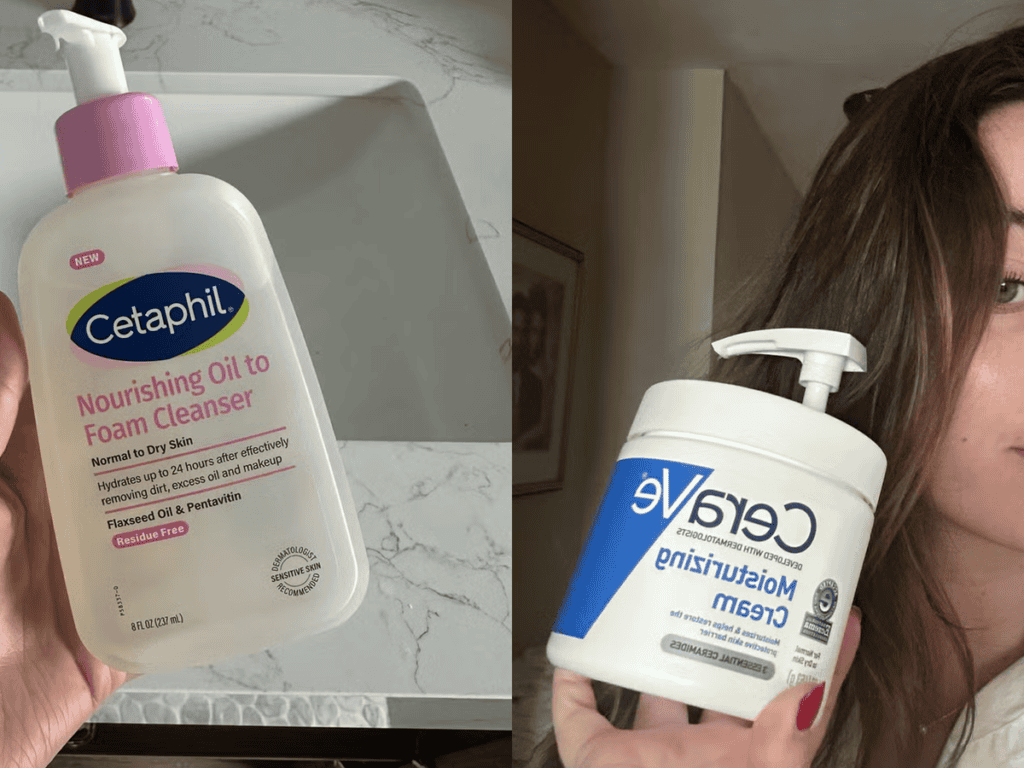
Cetaphil:
- Lotion texture
- Minimal foam
- Slightly cushioned after-feel
Foam gives psychological satisfaction, but foam level does not equal effectiveness.
Also Read : Cerave Foaming Cleanser
Who Should Use Cerave?
- Dry skin
- Acne-prone oily skin
- Aging skin
- Retinol users
- Compromised barrier
Who Should Use Cetaphil?
- Extremely sensitive skin
- Rosacea
- Post-laser treatment skin
- Eczema-prone individuals
- Children
Who Should Avoid Each?
Avoid Cerave if:
- Niacinamide irritates you
- Foam worsens dryness
Avoid Cetaphil if:
- You need strong oil removal
- You dislike a lotion-like residue
How to Use Properly
Morning Routine
- Use lukewarm water
- Apply Pea-sized amount
- Massage for 30–45 seconds
- Rinse gently
- Pat dry
- Apply moisturizer immediately
Evening Routine
If wearing sunscreen:
- Remove makeup or sunscreen first
- Cleanse thoroughly
- Apply treatment serums
- Seal with moisturizer
Double cleansing improves sunscreen removal.
Seasonal Usage Strategy Across the USA

Northeast winters:
Indoor heating increases TEWL → Cerave Hydrating preferred.
Southern humid states:
Increased sebum → Cerave Foaming helpful.
Desert climates:
Barrier vulnerability → Hydrating formulas essential.
Common Mistakes People Make
- Over-cleansing twice daily with foaming cleansers
- Using hot water
- Skipping moisturizer
- Pairing with harsh toners
- Switching cleansers too frequently
Consistency improves outcomes more than brand hopping.
Comparison With Other Top Brands
| Brand | Barrier Support | Acne Control | Sensitive Skin | Aging Skin |
|---|---|---|---|---|
| Cerave | High | Moderate-High | Moderate | High |
| Cetaphil | Moderate | Moderate | High | Moderate |
| La Roche-Posay | High | Moderate | High | High |
| Vanicream | Moderate | Moderate | Very High | Moderate |
| Aveeno Calm + Restore | Moderate | Low-Moderate | High | Moderate |
| Neutrogena Ultra Gentle | Low-Moderate | Moderate | Moderate | Low |
Buyer Psychology
Before buying, ask:
- Does my skin feel tight or oily after washing?
- Am I using retinoids?
- Do I live in a humid or dry state?
- Is redness my main concern?
- Do I prioritize barrier repair or immediate comfort?
This decision tree prevents regret purchases.
Buying Guidance
Look for:
- Fragrance-free labeling
- Non-comedogenic claim
- Version tailored to your skin type
- Compatibility with your climate
FAQ‘s
Which is better, Cetaphil or CeraVe cleanser?
Both Cetaphil and CeraVe cleansers are gentle and dermatologist-recommended, but they work slightly differently. CeraVe focuses on repairing the skin barrier using Ceramides, while Cetaphil emphasizes mild cleansing and hydration. The better option depends on your skin type and whether you need barrier repair or simple gentle cleansing.
Is CeraVe cleanser better than Cetaphil for dry skin?
CeraVe cleansers are often preferred for dry skin because they contain Ceramides and Hyaluronic Acid, which help restore the skin barrier and retain moisture. Cetaphil cleansers are also gentle, but CeraVe formulas tend to provide additional barrier-repair benefits that support long-term skin hydration.
Is Cetaphil or CeraVe better for sensitive skin?
Both brands are suitable for sensitive skin because they are fragrance-free and non-irritating. Cetaphil is known for extremely mild cleansing, while CeraVe adds Ceramides and Niacinamide to strengthen the skin barrier. People with compromised skin barriers often benefit more from CeraVe.
Which cleanser is better for acne-prone skin: Cetaphil or CeraVe?
For acne-prone skin, CeraVe Foaming Cleanser is often preferred because it helps remove excess oil while maintaining the skin barrier. Ingredients like Niacinamide and Ceramides support skin health, whereas Cetaphil focuses more on gentle cleansing rather than oil control.
What is the difference between Cetaphil and CeraVe cleansers?
The main difference is their ingredient focus. CeraVe cleansers contain three essential Ceramides that help repair the skin barrier, while Cetaphil cleansers prioritize gentle cleansing and skin hydration. Both brands are dermatologist recommended and suitable for daily use.
Do dermatologists recommend Cetaphil or CeraVe cleansers?
Yes, dermatologists commonly recommend both Cetaphil and CeraVe cleansers because they are non-comedogenic, fragrance-free, and gentle on the skin. The choice usually depends on the patient’s skin type, with CeraVe often suggested for barrier repair and Cetaphil for mild cleansing.
Is CeraVe or Cetaphil better for oily skin?
For oily skin, CeraVe Foaming Cleanser may be more effective because it helps remove excess oil while maintaining hydration. Cetaphil cleansers tend to be more moisturizing, which can feel slightly heavier for people with oily or combination skin types.
Which cleanser helps repair the skin barrier better?
CeraVe cleansers are specifically formulated to support the skin barrier because they contain three essential Ceramides. These lipids help strengthen the outer layer of the skin and reduce moisture loss, making CeraVe a popular option for people with damaged or weakened skin barriers.
Can Cetaphil and CeraVe cleansers be used daily?
Yes, both Cetaphil and CeraVe cleansers are designed for daily use, usually twice a day. Their gentle formulations help remove dirt, oil, and impurities without stripping the skin’s natural moisture barrier when used consistently.
Which cleanser is better for combination skin: Cetaphil or CeraVe?
For combination skin, many people prefer CeraVe cleansers because they balance oil control and hydration. Ingredients like Niacinamide and Ceramides help maintain skin barrier health while cleansing oily areas without over-drying the skin.
Do Cetaphil or CeraVe cleansers clog pores?
No, both Cetaphil and CeraVe cleansers are non-comedogenic, meaning they are formulated not to clog pores. They are designed to cleanse the skin effectively while maintaining hydration, making them suitable for acne-prone and sensitive skin types.
Which cleanser removes oil better: Cetaphil or CeraVe?
CeraVe Foaming Cleanser generally removes excess oil more effectively because it produces a light foam that helps lift sebum and impurities from the skin. Cetaphil cleansers are gentler and more hydrating, which may be better suited for dry or sensitive skin.
Final Verdict
The Cetaphil vs Cerave debate has no universal winner.
Still unsure? It helps to see what real users are saying before making a decision. Compare both options on Amazon
Cerave excels at:
- Barrier repair
- Acne support
- Aging skin hydration
Cetaphil excels at:
- Ultra-sensitive skin
- Rosacea
- Post-procedure care
The best cleanser is the one aligned with your skin biology, climate, and routine.
Choose based on skin behavior — not popularity.
Your cleanser sets the foundation for everything else in your routine.
Make that decision wisely.