Discover the best vitamin C serum for glowing skin, dark spots, and hyperpigmentation. Learn ingredients, benefits, routines, and how to choose the right ser
Why Vitamin C Serum Has Become a Skincare Essential
Many people invest in cleansers, moisturizers, and sunscreens but still struggle with dull skin, uneven tone, acne scars, or dark spots.
This is where vitamin C serum becomes one of the most powerful additions to a skincare routine.
When used correctly, the best vitamin C serum can help:
- brighten dull skin
- reduce hyperpigmentation
- support collagen production
- improve skin texture
- strengthen the skin barrier
But choosing the right formula is not always easy. The skincare market is saturated with hundreds of options claiming to be the best vitamin C serum for glowing skin.
Some contain unstable vitamin C.
Some contain irritating concentrations.
Others simply do not absorb effectively.
This guide explains how vitamin C serums work, which ingredients matter, how to choose the best formula, and how to use it correctly to maximize results.
What Is Vitamin C Serum
Vitamin C serum is a topical skincare treatment containing concentrated vitamin C compounds designed to improve skin tone, protect against environmental damage, and stimulate collagen synthesis.
Unlike vitamin C consumed in food, topical vitamin C works directly on the skin surface and deeper epidermal layers.
The most effective form is L-ascorbic acid, a potent antioxidant capable of neutralizing free radicals caused by UV exposure and pollution.
According to research from the Cleveland Clinic, topical vitamin C can help:
- reduce oxidative damage
- brighten skin tone
- support collagen synthesis
- reduce fine lines
The effectiveness of a serum depends on:
- concentration of vitamin C
- pH stability
- delivery system
- supporting ingredients
This is why not every product qualifies as the best vitamin C serum for face care.
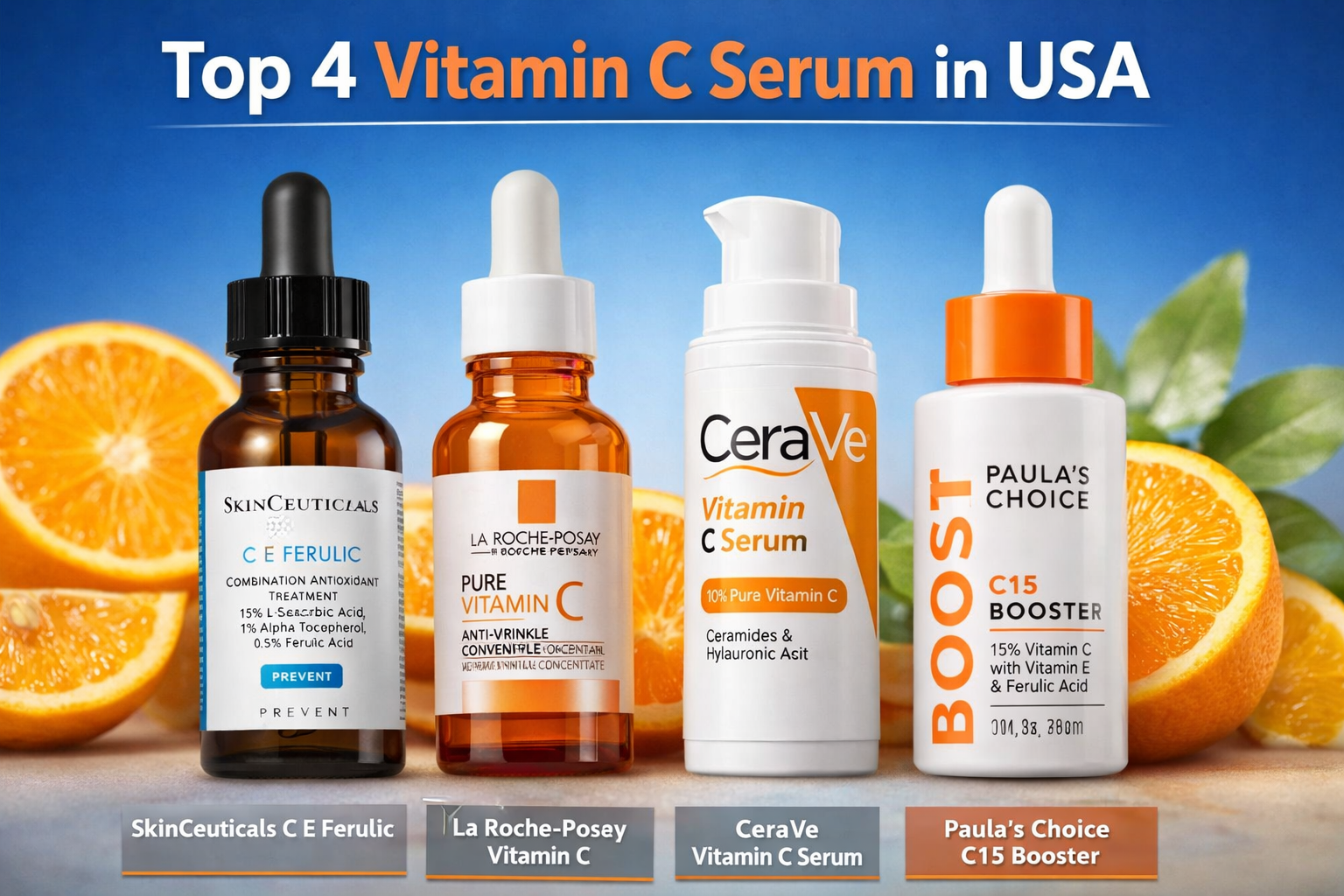
Top 4 Best Vitamin C Serums in the USA
SkinCeuticals C E Ferulic
This serum is widely considered one of the gold-standard vitamin C formulations in professional skincare.
Key features:
- 15% pure L-ascorbic acid
- Ferulic acid and vitamin E for antioxidant synergy
- Clinically tested for reducing oxidative damage
Studies show this formulation can significantly reduce environmental skin damage caused by pollution and UV exposure. (Skin Ceuticals)
Best for:
- aging skin
- sun damage
- uneven skin tone
Paula’s Choice C15 Super Booster
This lightweight antioxidant serum combines 15% vitamin C with vitamin E and ferulic acid, a combination known to improve stability and effectiveness.
Key ingredients:
- L-ascorbic acid
- vitamin E
- ferulic acid
Best for:
- hyperpigmentation
- dark spots
- dull skin
La Roche-Posay Pure Vitamin C12 Serum
This serum is often recommended for people with sensitive or reactive skin because it balances vitamin C with soothing ingredients.
Key ingredients:
- 12% pure vitamin C
- salicylic acid
- neurosensine
Users often report brighter skin and smoother texture after consistent use.
Best for:
- sensitive skin
- uneven skin tone
- mild hyperpigmentation
👉 Looking for a Gentle vitamin C serum for sensitive skin that dermatologists trust?
CeraVe Skin Renewing Vitamin C Serum
This drugstore vitamin C serum is popular because it combines 10% pure vitamin C with barrier-repair ingredients.
Key ingredients:
- L-ascorbic acid
- ceramides
- hyaluronic acid
The formula helps brighten skin while supporting the skin barrier, making it suitable for daily use.
Best for:
- dry skin
- sensitive skin
- beginners
Looking for an affordable vitamin C serum with ceramides for skin barrier repair? This beginner-friendly formula is one of the most popular options in the US.
Comparison
| Brand | Vitamin C Type | Skin Type | Key Supporting Ingredients |
|---|---|---|---|
| SkinCeuticals CE Ferulic | L-ascorbic acid | Aging skin | Vitamin E, Ferulic acid |
| La Roche-Posay Vitamin C Serum | Pure vitamin C | Sensitive skin | Hyaluronic acid |
| CeraVe Vitamin C Serum | L-ascorbic acid | Dry skin | Ceramides |
| Paula’s Choice C15 Booster | L-ascorbic acid | All skin types | Vitamin E, Ferulic acid |
Vitamin C Serum Benefits for Skin
Vitamin C has been extensively studied in dermatology. The benefits extend far beyond simple brightening.
Brightens Dull Skin
Vitamin C inhibits melanin production, reducing uneven pigmentation and dull complexion.
This makes it one of the best vitamin C serum ingredients for glowing skin.
Reduces Hyperpigmentation and Dark Spots
Vitamin C interferes with the enzyme tyrosinase, which plays a key role in melanin formation.
Consistent use can help fade:
- sun spots
- post-acne marks
- age spots
Supports Collagen Production
Collagen is responsible for skin firmness and elasticity.
Vitamin C acts as a cofactor in collagen synthesis, helping the skin maintain a smoother appearance.
Protects Against Environmental Damage
Pollution, UV radiation, and oxidative stress damage skin cells.
Vitamin C acts as an antioxidant shield, neutralizing free radicals before they damage skin tissue.
Improves Skin Texture
Many users notice smoother skin because vitamin C improves cell turnover and hydration balance.
Skin Barrier Science – Why Vitamin C Matters
The skin barrier (stratum corneum) protects the body from:
- environmental toxins
- bacteria
- water loss
When this barrier becomes compromised, symptoms appear:
- dryness
- redness
- sensitivity
- acne flare-ups
Vitamin C helps support the skin barrier by:
- reducing oxidative stress
- improving collagen network integrity
- supporting lipid balance
Research published in the National Institutes of Health indicates antioxidants like vitamin C may enhance barrier recovery.
Not sure which cleanser pairs best with Vitamin C serums? Our in-depth Cetaphil vs CeraVe cleanser comparison explains which formula works better for sensitive, dry, or acne-prone skin.
Key Ingredient’s – What Makes the Best Vitamin C Serum
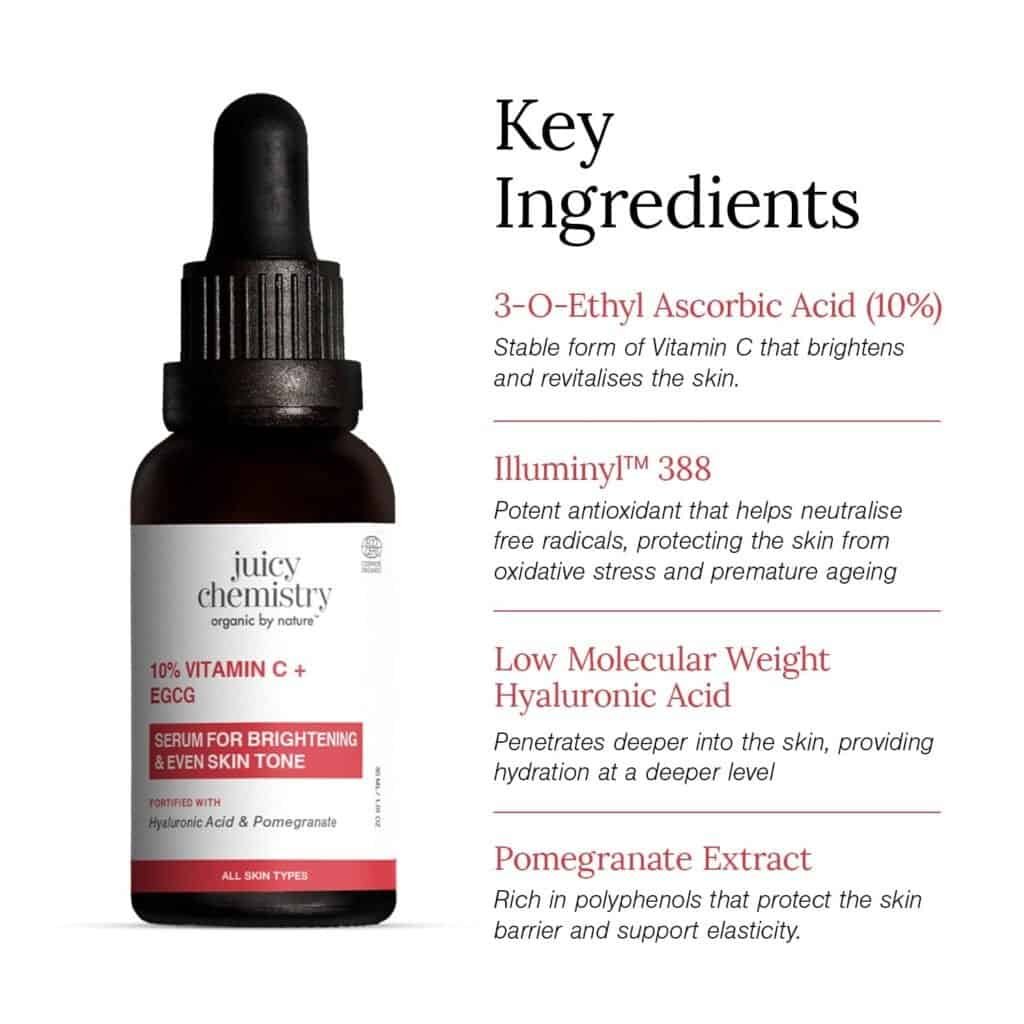
Understanding ingredients is essential when selecting the best vitamin C serum for hyperpigmentation or acne scars.
Below are the most important components found in effective formulations.
L-Ascorbic Acid
The purest form of vitamin C.
Benefits:
- strongest antioxidant activity
- stimulates collagen production
- improves skin brightness
Effective concentration: 10–20%
However, it can be unstable and degrade with exposure to light and air.
Sodium Ascorbyl Phosphate
A gentler derivative of vitamin C.
Benefits:
- more stable than L-ascorbic acid
- suitable for sensitive skin
- antimicrobial properties
Often used in formulas targeting acne-prone skin.
Magnesium Ascorbyl Phosphate
A water-soluble vitamin C derivative.
Benefits:
- improves skin hydration
- reduces irritation risk
- supports brightening effects
Often found in serums designed for dry skin.
Ferulic Acid
Ferulic acid stabilizes vitamin C and improves antioxidant activity.
When combined with vitamin C and vitamin E, research suggests antioxidant protection increases significantly.
Vitamin E (Tocopherol)
Vitamin E works synergistically with vitamin C.
Benefits:
- improves skin barrier protection
- reduces oxidative stress
- improves stability of vitamin C
Hyaluronic Acid
Not directly related to vitamin C activity but improves skin hydration.
Benefits:
- retains moisture
- reduces dryness caused by high vitamin C concentrations
Niacinamide
Often paired with vitamin C to improve:
- skin tone
- barrier strength
- oil regulation
Cases Discussion – When Vitamin C Serum Helps Most
Vitamin C serums are especially useful in several dermatological scenarios.
Acne Scars
Post-inflammatory hyperpigmentation is common after acne.
Vitamin C helps reduce pigment intensity over time.
Hyperpigmentation
Melasma and sun spots respond well to antioxidant treatment combined with sunscreen.
This is why many experts recommend vitamin C serum for hyperpigmentation.
Aging Skin
Collagen loss contributes to fine lines.
Vitamin C stimulates fibroblast activity supporting collagen production.
Post-Procedure Skin
After dermatologic procedures (like chemical peels), mild vitamin C derivatives can help support healing.
Who Should Use Vitamin C Serum
Vitamin C works well for most skin types.
Ideal users include:
- people with dull skin
- individuals with dark spots
- those experiencing early signs of aging
- people exposed to pollution or sun damage
It is widely considered the best vitamin C serum for glowing skin routines.
Who Should Avoid It
Although generally safe, some people should use caution.
Avoid or consult a professional if you have:
- extremely sensitive skin
- active rosacea flare
- severe eczema
- allergic reactions to antioxidants
Patch testing is recommended before first use.
How to Choose the Best Vitamin C Serum
Choosing the right formula can dramatically influence results.
Consider the following factors.
Vitamin C Concentration
Beginners: 10%
Experienced users: 15–20%
Higher concentrations do not always mean better results.
Packaging
Vitamin C degrades when exposed to light and air.
Choose:
- dark glass bottles
- air-tight pump packaging
pH Level
Optimal pH for L-ascorbic acid absorption: below 3.5
Supporting Ingredients
Look for combinations including:
- vitamin E
- ferulic acid
- hyaluronic acid
These improve effectiveness and stability.
How to Use Vitamin C Serum Correctly
Correct application determines whether the serum delivers visible results.
Step 1 – Cleanse Skin
Use a gentle cleanser to remove oil and impurities.
Step 2 – Apply Toner (Optional)
Hydrating toners can improve serum absorption.
Step 3 – Apply Vitamin C Serum
Use 2–3 drops and gently press into the skin.
Avoid rubbing aggressively.
Step 4 – Moisturize
Seal hydration using a moisturizer.
Step 5 – Apply Sunscreen
Vitamin C improves sun protection but does not replace sunscreen.
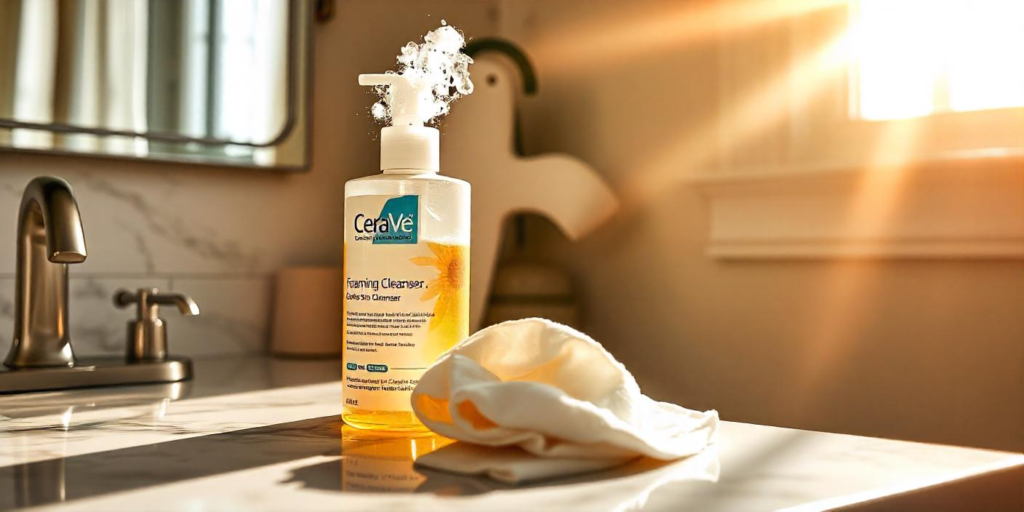
Before applying a Vitamin C serum, using a gentle cleanser is essential to remove oil and impurities. Read our detailed CeraVe Foaming Cleanser review to see why dermatologists recommend it for oily and acne-prone skin.
Common Mistakes Users Make
Many people do not see results because of avoidable mistakes.
Common issues include:
- using oxidized vitamin C serum
- storing serum in bright environments
- combining with incompatible actives
- skipping sunscreen
Oxidized vitamin C turns dark orange or brown and becomes less effective.
AM Skincare Routine Using Vitamin C Serum
Morning routines maximize antioxidant protection.
Typical AM routine:
Cleanser → Vitamin C serum → Moisturizer → Sunscreen
This combination helps protect skin from:
- pollution
- UV radiation
- oxidative stress
PM Skincare Routine Pairing
At night, vitamin C can be combined with repair ingredients.
Example routine:
Cleanser → Vitamin C serum → Retinol (alternate nights) → Moisturizer
This approach supports collagen stimulation and skin renewal.
After applying Vitamin C in the morning, nighttime repair is equally important. Explore the full CeraVe PM Facial Moisturizing Lotion ingredients breakdown to understand how ceramides and niacinamide support the skin barrier.
Seasonal Usage Strategy (USA Climate)
Climate affects skincare performance.
Winter States (New York, Illinois)
Dry air increases transepidermal water loss.
Pair vitamin C serum with hydrating moisturizers.
Humid States (Florida, Texas)
Lightweight vitamin C formulas with niacinamide may feel more comfortable.
High UV States (California, Arizona)
Morning vitamin C use combined with sunscreen provides additional antioxidant protection.
Traveling soon? You can still maintain your glow routine with CeraVe travel size skincare products, perfect for flights and TSA-approved carry-on skincare.
Texture & Sensory Experience
Different vitamin C serums vary in texture.
Common formats include:
- watery serums
- gel serums
- lightweight emulsions
High-quality formulas should feel:
- lightweight
- non-sticky
- fast absorbing
Texture affects compliance—if the serum feels uncomfortable, users stop using it.
Pros and Cons
Pros
- brightens skin tone
- reduces hyperpigmentation
- supports collagen production
- protects against oxidative stress
Cons
- may irritate sensitive skin
- unstable in poor packaging
- visible results take time
FAQs
Which vitamin C serum is best in the USA for glowing skin?
Dermatologists often consider SkinCeuticals C E Ferulic one of the best vitamin C serums in the USA because it contains 15% pure L-ascorbic acid with vitamin E and ferulic acid, which helps brighten skin, improve collagen production, and protect against environmental damage.
Is SkinCeuticals C E Ferulic better than other vitamin C serums?
SkinCeuticals C E Ferulic is widely called the “gold standard” vitamin C serum due to its clinically studied formula and strong antioxidant protection. It combines vitamin C, vitamin E, and ferulic acid to improve skin brightness, firmness, and protection against free radicals.
Is La Roche-Posay Vitamin C Serum good for sensitive skin?
Yes. La Roche-Posay Vitamin C Serum is suitable for many sensitive skin types because it contains 10% pure vitamin C, neurosensine, and hyaluronic acid, which help brighten the skin while reducing irritation and improving hydration
Is CeraVe Vitamin C Serum good for beginners?
Yes. CeraVe Vitamin C Serum is often recommended for beginners because it combines 10% pure vitamin C with ceramides and hyaluronic acid, helping brighten skin while strengthening the skin barrier and maintaining hydration.
What makes Paula’s Choice C15 Booster a popular vitamin C serum?
Paula’s Choice C15 Super Booster contains 15% vitamin C along with vitamin E and ferulic acid, which enhances antioxidant protection and helps reduce fine lines, dark spots, and uneven skin tone.
How does vitamin C serum improve skin appearance?
Vitamin C serum works as a powerful antioxidant, helping reduce hyperpigmentation, brighten dull skin, and protect against free radical damage caused by pollution and UV exposure.
Which vitamin C serum is best for dark spots and hyperpigmentation?
Products with L-ascorbic acid (10–20%), such as SkinCeuticals C E Ferulic and Paula’s Choice C15 Booster, are considered highly effective for reducing dark spots and improving uneven skin tone.
Can vitamin C serum be used daily?
Yes. Most dermatologists recommend using vitamin C serum once daily, usually in the morning after cleansing and before moisturizer and sunscreen for maximum antioxidant protection.
Which vitamin C serum is best for oily or acne-prone skin?
Lightweight formulas such as La Roche-Posay Vitamin C Serum or CeraVe Vitamin C Serum are often suitable for oily or acne-prone skin because they contain hydrating ingredients and non-comedogenic formulations.
How long does it take for vitamin C serum to show results?
Most people begin noticing brighter and more even skin tone within 4–8 weeks of consistent use because vitamin C gradually supports collagen production and reduces pigmentation.
Can vitamin C serum be used with other skincare products?
Yes, vitamin C serum works well with moisturizers, hyaluronic acid, and sunscreen, but it should not be applied at the same time as strong exfoliating acids or benzoyl peroxide because they may reduce its effectiveness.
Which vitamin C serum is best overall among the top 4 in the USA?
Among the top options, SkinCeuticals C E Ferulic is frequently rated the best overall for its clinically backed formula, while La Roche-Posay, CeraVe, and Paula’s Choice offer excellent alternatives for sensitive skin, beginners, and affordable antioxidant protection.
Final Verdict
Vitamin C serums remain one of the most evidence-supported skincare ingredients available today.
👉 Want a high-potency 15% vitamin C serum that targets dark spots and dull skin fast?
This antioxidant booster is a favorite among skincare enthusiasts.
When formulated correctly and used consistently, the best vitamin C serum can help:
- brighten skin tone
- reduce hyperpigmentation
- improve collagen production
- protect against environmental stress
The key is choosing a stable formula with the right concentration and supporting ingredients.
Rather than focusing only on brand names, evaluate the ingredient composition, packaging stability, and compatibility with your skin type.
With the right formula and routine, vitamin C can become one of the most transformative steps in a skincare regimen.